Closing Statement
July 26, 2025
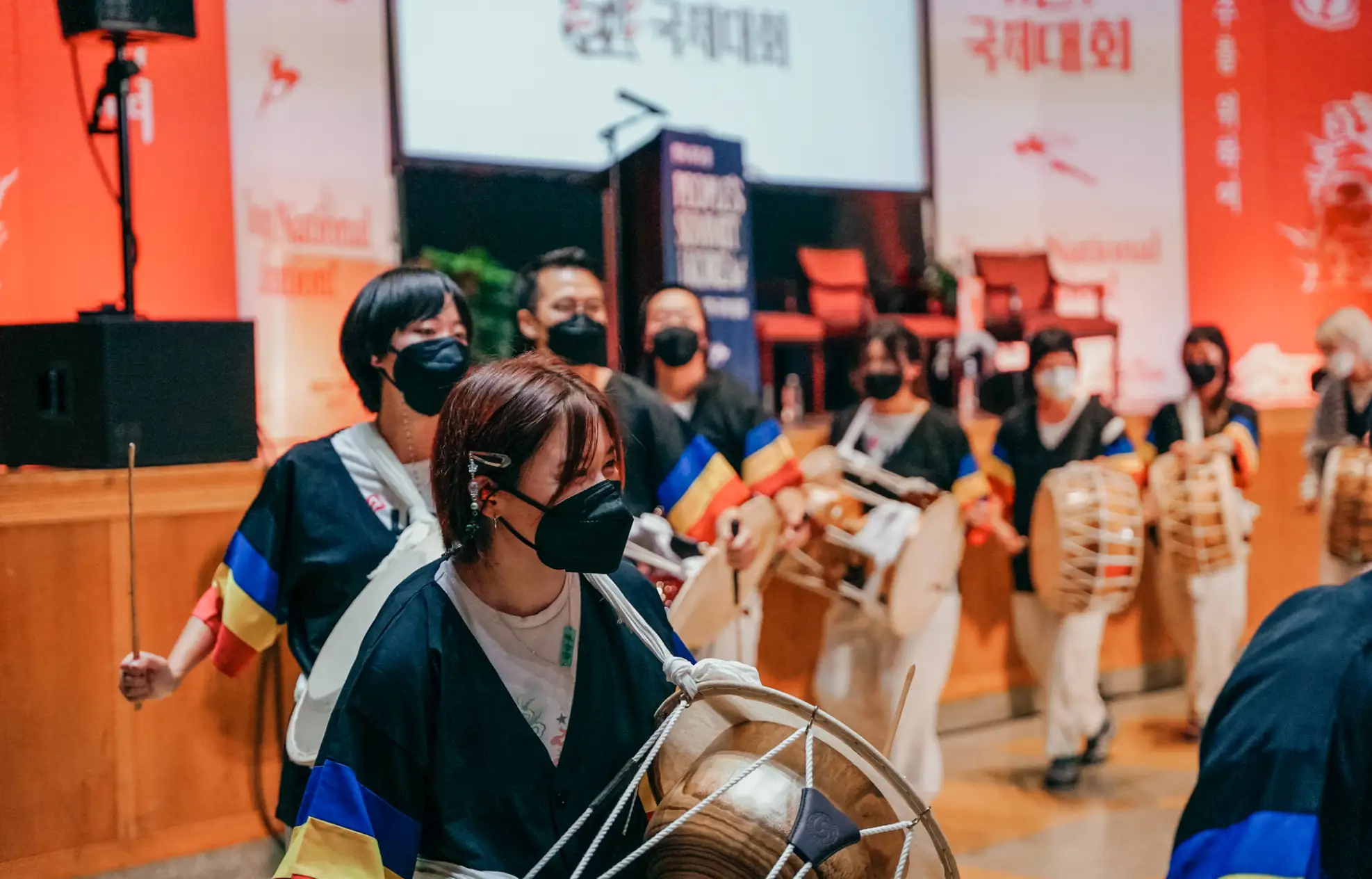
As we close the first People’s Summit for Korea, we reflect not just on where we are today, but how we got here. The dates that mark this weekend are not just history but calls to action.
Today, July 26, marks 75 years since the start of the Nogun-ri Massacre, when the U.S. military, under orders to treat Korean refugees as enemy combatants, slaughtered over 400 villagers from Nogun-ri in southern Korea. For decades, the truth about Nogun-ri was suppressed – until survivors forced the truth into the open in the 1990s. To this day, the U.S. refuses to acknowledge its role in this crime.
Nogun-ri is just the most famous of thousands of civilian massacres committed by U.S. and ROK forces across our homeland from 1948-1953. As we honor Nogun-ri, we must not forget the countless massacres and atrocities committed by the UN Command and ROK forces under orders from the highest levels of the U.S. government.
Tomorrow, July 27, will mark the 72nd anniversary of the signing of the Korean War Armistice. This is a day we often remember somberly – for the division imposed upon our homeland, for families torn apart, and for a liberation struggle, which, 80 years since the end of Japanese colonialism, remains incomplete. But this is not only a time for grief – it is also a time for pride in our struggle.
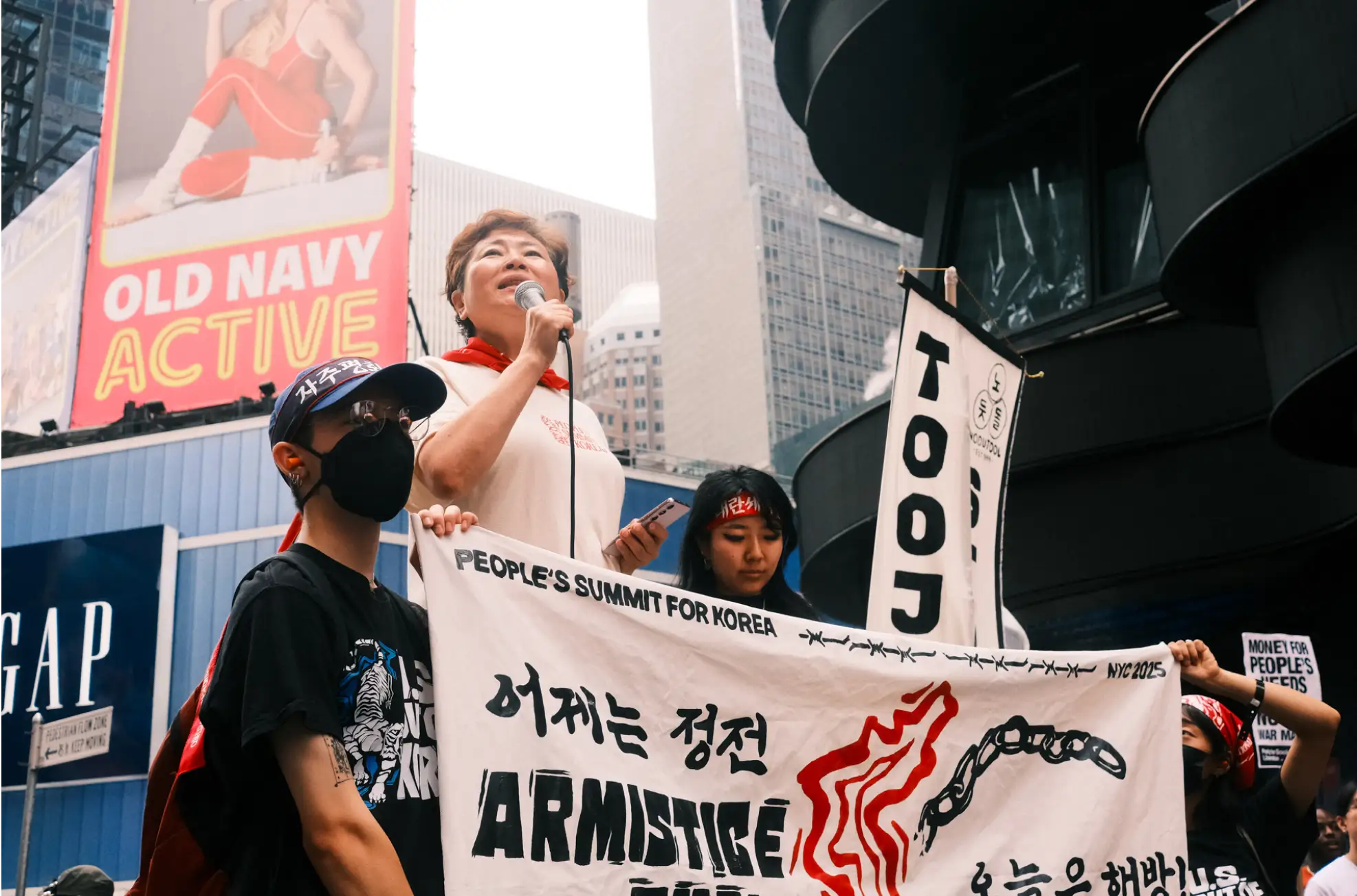
Eighty years since the U.S. began its division and occupation of Korea, it still fails to impose its rule over our entire homeland.
In the north, our people have met the daily challenges of U.S. aggression with unwavering unity and a steadfast commitment to their sovereignty. In the south, our people have toppled Washington’s puppet presidents not once, but four times. While we mourn a lifetime of national division, we also recognize a lifetime of failure for U.S. imperialism, and we celebrate our people’s indomitable spirit and resistance. Tomorrow, as we march through the streets of New York City, we will send a clear message: Korea’s liberation is not a question of if, but when.
This is the fundamental difference between us and the occupier: we are right where we belong because we are the land. They are strangers who came not in peace, but to colonize – and they can only remain through violence. That is why the U.S. imperialists constantly maneuver to raise the specter of war: 200 days of war drills in 2023, 275 in 2024, and still more this year. These provocations are meant to display power, but they only expose desperation.
Imperialism, not only in Korea but worldwide, is in a crisis of its own making. After 500 years of colonial subjugation, the nations of the Global South are rising, asserting power as the majority of humanity. The capitalist system that enriched the ruling classes of the U.S., Japan, and Europe is hitting its historical limits, facing deepening social and political crisis at home, while tearing apart the ecological fabric of our planet. In a last-ditch effort to maintain dominance, the U.S. is racing to crush the rise of independent powers through war, blockade, and occupation. But it is overwhelmed, unprepared, and doomed to fail.
This logic of crisis drives the genocide in Palestine, the attacks on Iran, and the intensifying aggression against the People’s Republic of China. This is why Korea and the entire Indo-Pacific region have become a frontline. Earlier this year, a U.S. commander in Korea, Xavier Brunson, called the ROK a “fixed aircraft carrier” – a chilling expression of how Washington views our homeland. Now, U.S. lawmakers are calling to redeploy nuclear weapons to the peninsula, and the Pentagon is openly planning to use troops in Korea to fight a future war against China.
At the same time, the Trump administration’s tariff war seeks to deepen the ROK’s economic exploitation. Trump claims that the exploitation of the Korean people will save the U.S. worker. But we are here today, joined by the multinational working class of the U.S., to say that this is a lie. When workers are pitted against each other, we face only common destruction; when united, we can struggle for our shared liberation.
The crisis of world imperialism in our time leaves us with two choices: to side with a barbaric, dying imperialism, or to stand with the rising forces of sovereignty and national liberation worldwide.
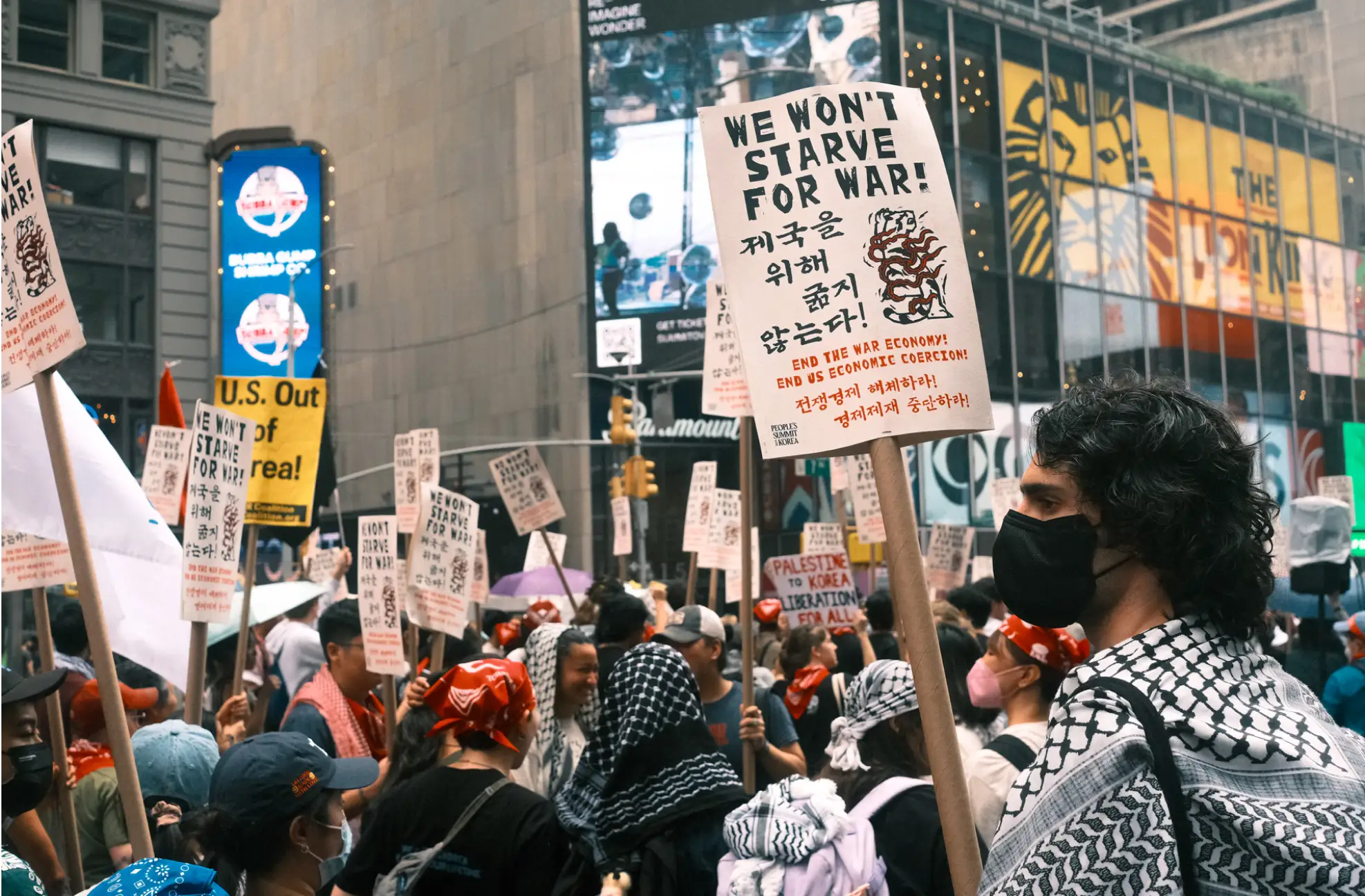
Our movement must be a decidedly anti-imperialist movement, rooted in solidarity with the forces of independence in the Global South, and united with the international working class against capitalist exploitation.
The demands of the Korean masses can only be achieved through a struggle for national liberation from U.S. imperialism, which will clear the way to build a Korean peninsula, an East Asia, and a world where the masses of working people are the masters of society.
The challenges facing Korea are immense. The U.S. drive for war has shattered the previous paradigm of inter-Korean relations and the pursuit of reunification based on the principles of independence, peace, and national unity. The lackey Yoon Seok-yeol attempted to restart the war and pursue regime change in the DPRK in the name of capitalist expansion, but the Korean masses defeated his plot. Yet, the election of Lee Jae Myung does not mean an end to the mass struggle. This is not a time to retreat; it is a time to advance.
The Republic of Korea must transform – from a U.S. outpost into a sovereign force that stands in fraternity with the DPRK and all nations of Asia. The Korean ruling class will not create this transformation. We will not find the saviors of our country in the halls of power; we must look to the factories, shipyards, markets, schools, and fields – to the people. The fearless masses who expelled Japanese colonizers, rebuilt from the ashes of war, and defeated Yoon – they must now create a society with true independence, democracy, and dignity. Our people are the only force that has ever moved history forward, and we must rely on them again to confront the greatest threat to Korea and all humanity: U.S. imperialism itself.
For the past two days, we have gathered here in Riverside Church, a historic site in the anti-imperialist struggle. Together we have assessed our movement and sharpened our vision. Whether we live in Korea or the U.S., our task is clear: we must stand against imperialist war in Korea, in China, in the Pacific, and across the Global South; we must advance the working class movement; and we must transform this era of imperialist overreach and fascist resurgence into an era of revolution and national liberation.
In just a few weeks, the U.S. will once again conduct its Ulchi Freedom Shield war games in Korea. Last year, they rehearsed nuclear strikes. Earlier this year, the U.S. and ROK forces razed the village of Nogok-ri during a joint war drill, wounding dozens. So long as the U.S. can treat Korea as its military playground, there can be no independence. We must meet their escalation with organized resistance. On August 15, this year’s Liberation Day, our comrades in the ROK will take to the streets to defy Ulchi Freedom Shield and demand a true liberation. Across the U.S., we will join them in a national day of action.
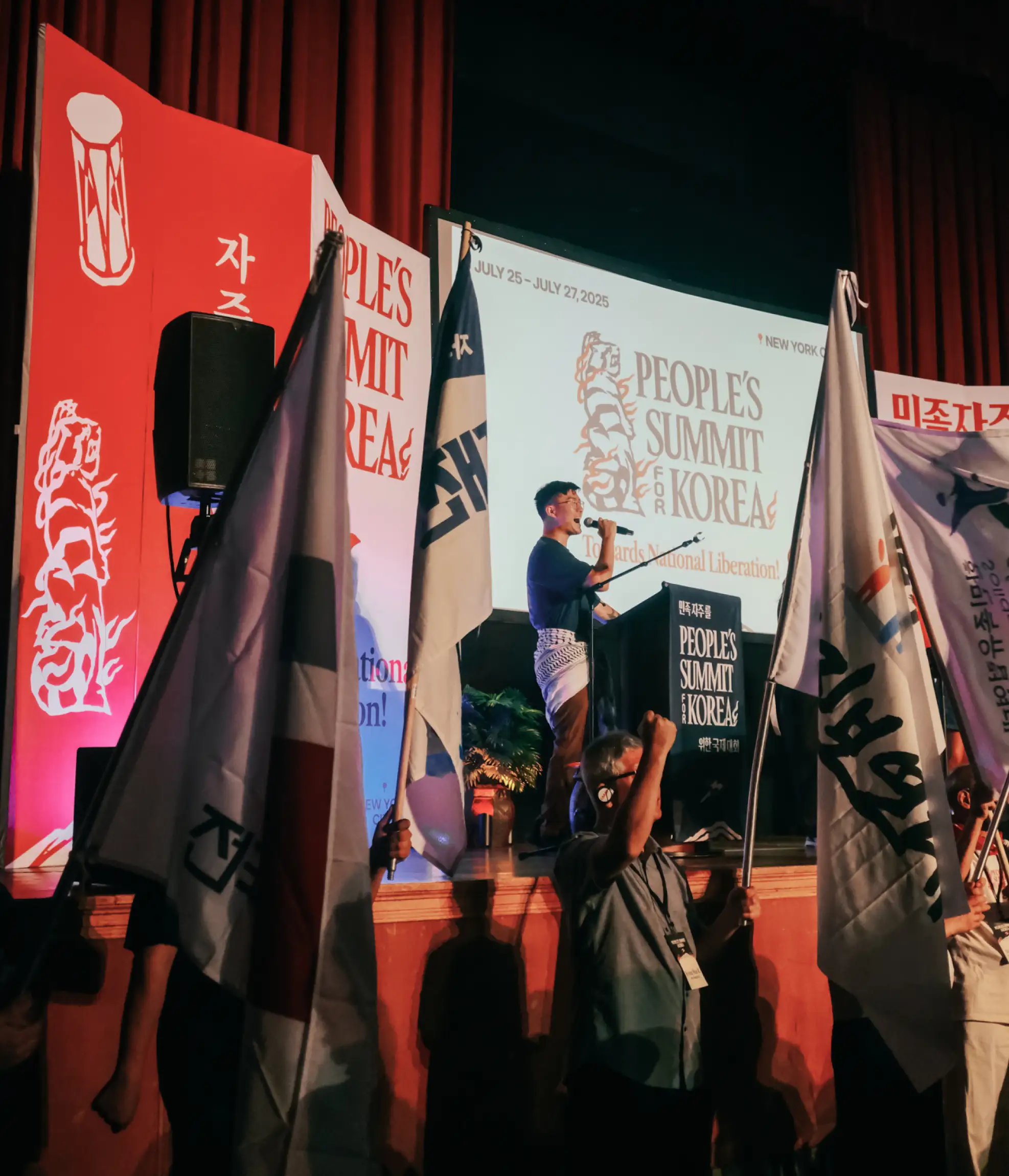
As we close this Summit, we recognize that we have only just begun. These past two days will be a small chapter in the greater struggle to come. But they have brought us together – across oceans and borders, and across generations and movements.
As we close, we move forward with renewed unity in the Korean liberation struggle and the international struggle against imperialism and capitalism.
To our comrades who return to the homeland, remember: your comrades abroad stand with you in the fight against imperialism. We in the diaspora, who are conscious of our history, are building a powerful movement to bring the fight for national liberation into the belly of the beast. We may be separated by great distances and time, but we will never be severed from the struggle in our homeland. We do not fight alone but alongside the working masses who will be the gravediggers of this empire. The world’s working people will stand with the people of Korea on the basis of common principle and destiny for sovereignty and dignity.